

Decoding the IB DP Curriculum: What Every New Student Should Know
Starting the International Baccalaureate Diploma Programme, better known as the IB DP, can feel like entering a completely different academic world. It isn’t merely a tougher version of ordinary school. The programme has its own subject structure, core requirements and assessment system. The workload can be demanding, but success isn’t reserved for unusually gifted people.
Understanding how everything fits together makes it much easier to plan. Diploma candidates study six subjects while completing three core components over two years. That combination calls for steady effort. Large assignments, internal assessments and final examinations all compete for attention, so good planning matters just as much as subject knowledge.
Some learners also consult IB writers for help understanding difficult instructions, organising their schedules or improving the clarity of their drafts.
What Is the IB Diploma Programme?
The IB Diploma Programme is a two-year course of study intended for people aged 16 to 19. It is offered by authorised schools around the world and is designed to prepare learners for university, employment and life beyond school.
The diploma isn’t simply a bundle of unrelated courses. Its curriculum connects six subject groups with a shared core, allowing learners to build broad knowledge while exploring selected subjects in greater depth.
Universities and governments around the world recognise the programme, although admission rules differ between institutions and countries. Individual requirements can be checked through the IB’s university recognition database.
The Six Subject Groups
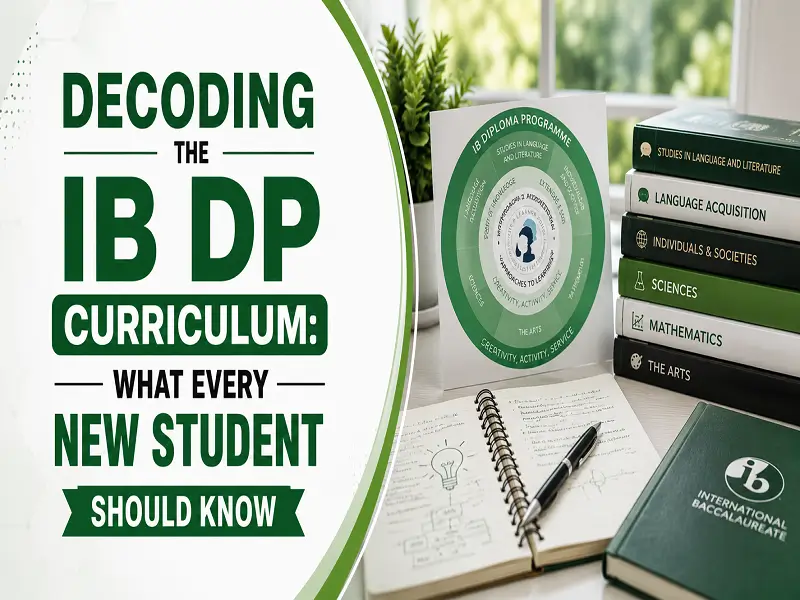
The six subject groups are Studies in Language and Literature, Language Acquisition, Individuals and Societies, Sciences, Mathematics and the Arts. Instead of taking an Arts course, a learner may select an additional subject from another group, depending on what their school offers. This structure is explained in the IB’s Diploma Programme overview.
At least three subjects and no more than four are taken at Higher Level, or HL. The remaining subjects are studied at Standard Level, known as SL. The IB recommends approximately 240 teaching hours for an HL course and 150 hours for an SL course.
HL choices deserve careful thought because universities can set their own subject and grade requirements. A degree programme may ask for a particular subject at HL rather than simply accepting a strong overall score. Applicants can check individual institutions through the IB’s recognition portal.
Experienced IB writers can also explain how subject choices may affect the type of academic support someone needs later.
The Core: Where Students Lose and Gain the Most Points
Alongside the six subjects, every diploma candidate completes three core components: Theory of Knowledge, the Extended Essay and Creativity, Activity, Service. These are required parts of the curriculum rather than optional extras.
TOK and the Extended Essay are graded and can contribute up to three additional points to the final diploma result. CAS does not add points, but completing its requirements is necessary to receive the diploma.
Theory of Knowledge (TOK)
Theory of Knowledge explores how people develop and justify what they believe they know. It raises questions such as: What counts as reliable evidence? How do personal experiences influence our beliefs? Do different fields build knowledge in different ways?
TOK is assessed through an exhibition and a 1,600-word essay. The exhibition uses three objects to explore how TOK appears in the real world, while the essay examines a broader conceptual question.
The course can seem rather abstract at first. Its practical value lies in teaching people to examine assumptions, compare different perspectives and support their conclusions with evidence. Those habits can also be applied in subjects such as history, science and mathematics.
Good IB writers support this process by helping learners organise their reasoning without replacing their personal ideas or conclusions.
The Extended Essay (EE)
The Extended Essay is an independent research project that ends in a paper of up to 4,000 words. It allows each learner to investigate a focused topic connected to an available DP subject or take an interdisciplinary World Studies approach.
The essay is externally assessed. Its grade is combined with the TOK grade to determine how many of the three available core points a candidate receives. Under the curriculum for first assessment in 2027, a candidate must also earn at least a D in the Extended Essay to receive the diploma.
Choosing a focused question makes the project much easier to handle. A huge topic may sound impressive, but it can be difficult to investigate properly within 4,000 words. Starting early also leaves enough time for research, discussions with the supervisor and careful revision.
A responsible IB writing service may provide research guidance, editing or feedback, but the final essay should always reflect the learner’s own research and arguments.
Creativity, Activity, Service (CAS)
CAS stands for Creativity, Activity and Service. It allows participants to learn through experiences outside their academic subjects. These can include creative work, physical activity, volunteering or a larger project that combines more than one CAS area.
CAS is not given a numerical or letter grade. Completion is evaluated by the school, and meeting its requirements is one of the conditions for earning the diploma.
The idea isn’t simply to build a long list of activities. CAS is meant to involve meaningful experiences and personal reflection. Choosing something genuinely interesting usually makes continued participation feel much more natural.
How IB Assessment Works
Every DP subject is graded from 1 to 7, with 7 being the highest grade. Six grades of 7 produce 42 subject points, while TOK and the Extended Essay can add up to three more. That creates a maximum diploma score of 45.
A candidate generally needs at least 24 total points, but reaching 24 does not guarantee the diploma on its own. CAS must also be completed, grades must be awarded for every subject and core component, and minimum HL and SL totals must be met.
Assessment includes both externally and internally assessed work. Final examinations form the main assessment in most courses. Internally assessed tasks are marked by teachers and then externally moderated by the IB to help maintain consistent standards.
The exact internal task depends on the subject. Examples include oral work in languages, geography fieldwork, science laboratory work, mathematical investigations and artistic performances.
Because internal assessments are completed during the programme, they need attention well before the final examination period. Their weighting varies by course, so learners should check the current guide for each subject rather than assuming every internal assessment carries the same number of marks.
Because each subject follows different criteria, IB writers should tailor their feedback to the relevant course instead of offering generic advice. When working with them, learners should look for ethical support that strengthens their understanding while keeping all assessed work original.
FAQs
How many points are needed for the IB Diploma?
You generally need at least 24 out of 45 points. You must also complete CAS, receive valid grades for all subjects and meet the minimum requirements for Higher and Standard Level courses.
Is the IB harder than A-levels?
They are challenging in different ways. The IB covers six subjects and three core components, while A-levels usually allow deeper focus on fewer subjects. Which feels harder depends on the learner.
Can learners choose any subject combination?
Not completely. Learners choose from the required subject groups, although Arts can usually be replaced. Available combinations also depend on the school timetable and university entry requirements.
Final Thoughts
The IB DP includes six subjects, three core components, and a combination of internal and external assessments. Although the workload may seem overwhelming at first, it is spread across two years. Understanding the programme’s structure early helps learners see what needs attention and plan their time with greater confidence overall. Keeping track of deadlines and understanding the marking criteria can make the IB experience much easier to manage. Major tasks, including the Extended Essay and internal assessments, should be started early. Steady progress reduces last-minute pressure and gives learners enough time to research, revise, reflect, and produce stronger final work.

Mark Wood is a PhD-qualified academic writer and editor with expertise in the International Baccalaureate (IB) curriculum. As an academic writer and editor at ibwritings.com, Mark has extensive hands-on experience with IB essays, Internal Assessments, TOK, and Extended Essays. Mark has helped thousands of students with high-stakes IB requirements, earning him recognition for his accuracy, subject matter expertise, and consistency. Mark’s academic credentials, combined with his in-depth knowledge of IB requirements, enable him to create clear, accurate, and high-quality content that is consistent with international academic standards.